
















About Us
Explain to you how all this mistaken denouncing pleasure and praising pain was born and we will give you a complete account of the system, and expound the actual teachings. Mistaken denouncing pleasure and praising pain was born and we will give you complete account of the system expound.
About UsContact Info
3rd Floor, 305, New Patidar Bhavan, Hira Bazar, Mahidharpura, Surat, Gujarat, 395003+91 9227984155
support@diamorivo.com
Diamond Ring Trends 2026: Modern Settings and Styling Ideas
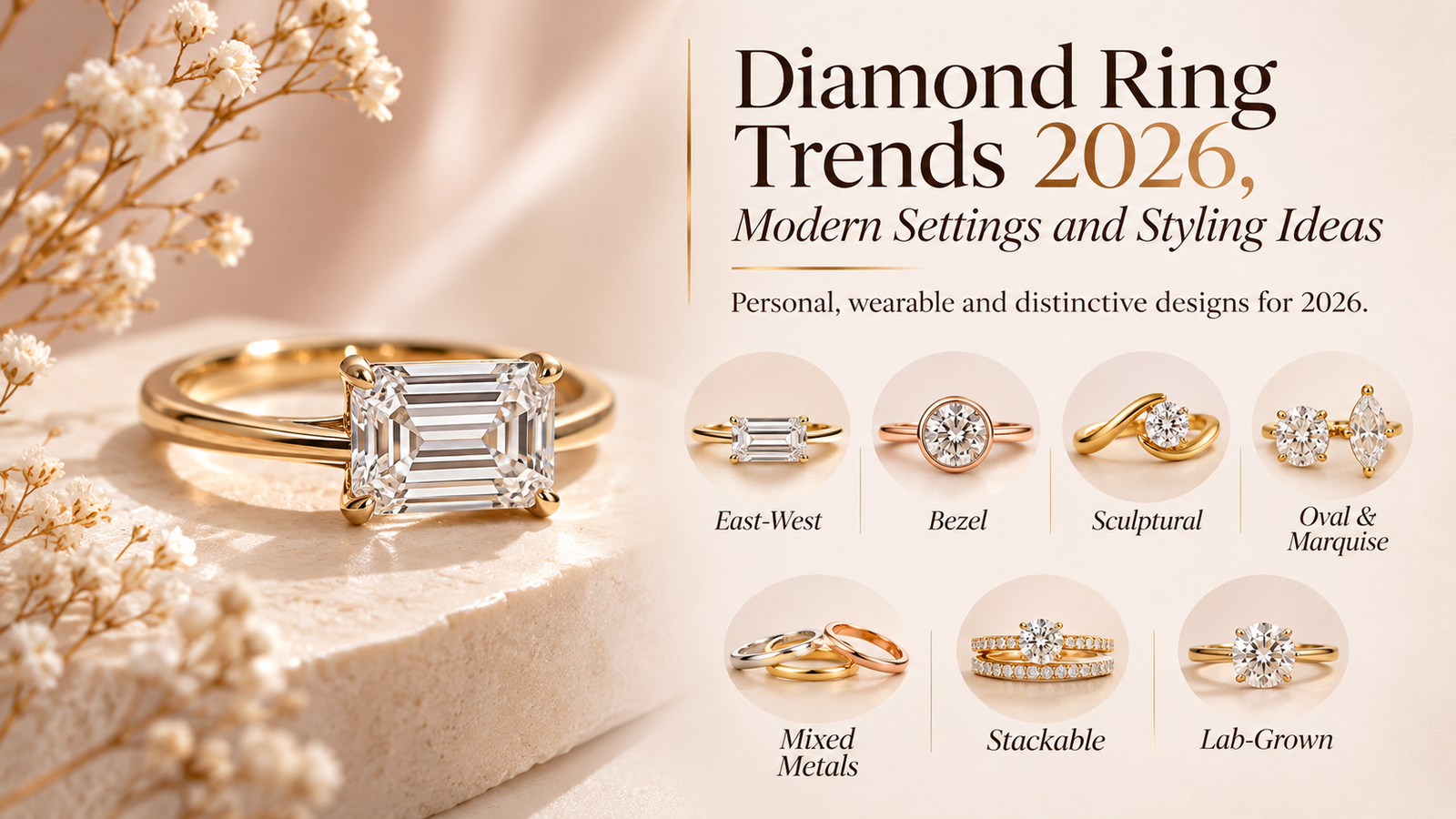
A diamond ring is no longer reserved for engagements or milestone celebrations. In 2026, shoppers are exploring styles that feel personal, wearable and distinctive, whether they are choosing their first diamond or updating a much-loved collection. The most interesting change is not simply a larger stone. It is the way designers combine diamond shape, setting and metal to create rings with character.
If you are considering a new diamond ring, start with how it will fit your lifestyle. The right jewellery should feel comfortable during an ordinary day and special enough for an important occasion. Here are the design directions worth understanding before making a choice.
01
East-West Settings Offer a Fresh Perspective
In a conventional setting, elongated stones typically run along the finger. An east-west setting turns an oval, emerald, radiant or marquise diamond across the finger instead. This modest change creates a contemporary silhouette while allowing the stone itself to remain the focus.
An east-west diamond ring works particularly well with clean, structured clothes and other understated jewellery. However, the horizontal setting may project farther across the finger, so check how it feels against neighbouring fingers. Try the ring on, move your hand naturally and consider whether it fits comfortably beside a wedding band.
02
Bezel Settings Combine Simplicity and Protection
A bezel uses a rim of metal around the edge of a diamond instead of relying only on visible prongs. The smooth outline makes this design especially appealing to people who like modern, minimal forms. A well-made bezel can also help protect vulnerable edges from everyday knocks.
Bezel settings are not automatically maintenance-free. Their security still depends on craftsmanship, and some designs are higher or heavier than others. Check the finishing around the stone and ask whether the ring can be cleaned and inspected easily. For someone who wears a diamond ring frequently, those practical considerations matter as much as its appearance.
03
Sculptural Bands Become Part of the Design
Rather than treating the band as a background detail, many modern rings use flowing curves, soft waves, asymmetry and substantial gold surfaces. A single diamond set against a sculptural band can feel expressive without requiring a cluster of additional stones.
To style a bold diamond ring, let it lead the look. Pair it with a small bracelet or delicate earrings rather than several competing statement pieces. Sculptural rings also look striking with a crisp white shirt, tailored blazer, monochrome dress or contemporary saree. Keep in mind that a wider band may fit differently from a slim one; confirm sizing before ordering.
Rather than treating the band as a background detail, many modern rings use flowing curves, soft waves, asymmetry and substantial gold surfaces. A single diamond set against a sculptural band can feel expressive without requiring a cluster of additional stones.
04
Oval and Marquise Shapes Remain Distinctive
Oval and marquise diamonds offer elongated outlines that can create the visual impression of longer fingers. An oval has softer curves and a versatile elegance, while a marquise has pointed ends that make a stronger statement. Neither shape is inherently better; the right choice depends on proportion and personal preference.
When comparing diamonds, look beyond carat weight. Shape, length-to-width ratio, cut quality, clarity and the setting all influence the finished ring. For marquise stones, pay attention to protection around the tips. For oval stones, examine how the centre looks in different lighting. Take time to assess the actual appearance instead of relying only on specifications.
05
Mixed Metals Make Styling More Flexible
Wearing yellow gold alongside white or rose gold is no longer a styling mistake. Mixing metals can make a jewellery collection more versatile, especially when you already own pieces in several tones. A white-metal diamond ring can look beautiful beside a warm gold bracelet, for example.
The simplest approach is to repeat one metal colour somewhere else in your outfit, perhaps through a watch or another subtle accessory. You can also choose a ring that combines metal tones within the design. There is no need to match every item exactly; balance matters more than uniformity.
06
Stackable Rings Support Personal Expression
Stacking allows a wearer to combine a diamond ring with slim bands, textured surfaces and small accent stones. One carefully chosen ring can be worn alone for work, then layered with complementary bands for a dinner or celebration. This flexibility is part of the appeal.
Avoid stacks that press exposed diamonds against hard metal edges. Repeated rubbing can damage the finish or a delicate setting over time. Choose bands with compatible profiles, leave room for comfortable movement and check that the combination does not pinch the finger. Two well-matched rings often look more polished than five crowded ones.
07
Lab-Grown Diamonds Broaden Design Options
Lab-grown diamonds have essentially the same chemical composition, crystal structure and optical properties as natural diamonds, but they are created through controlled technological processes. They offer another option for people comparing designs, shapes and budgets. Their growing visibility has also encouraged greater interest in contemporary diamond jewellery.
Always compare stones on quality rather than origin alone. Review the cut, colour, clarity, carat weight and supporting grading information. Look closely at the quality of the setting and the finish of the band, too. A beautiful diamond ring needs a thoughtful design and sound craftsmanship as well as an attractive stone.
Lab-grown diamonds have essentially the same chemical composition, crystal structure and optical properties as natural diamonds, but they are created through controlled technological processes. They offer another option for people comparing designs, shapes and budgets. Their growing visibility has also encouraged greater interest in contemporary diamond jewellery.
08
How to Choose a Ring for Everyday Wear
A ring that looks impressive in a photograph may behave differently during daily activities. If you type often, work with your hands or wear gloves, a lower-profile design may be easier to live with. Smooth edges can reduce snagging, while a secure setting offers peace of mind.
Consider the band width, ring size and how the design sits against your skin. Check whether any pointed edges catch on fabric. Ask about care recommendations and periodic inspection. These questions are particularly important when selecting jewellery intended for frequent wear rather than occasional use.
A ring that looks impressive in a photograph may behave differently during daily activities. If you type often, work with your hands or wear gloves, a lower-profile design may be easier to live with. Smooth edges can reduce snagging, while a secure setting offers peace of mind.
09
Styling a Diamond Ring for Different Occasions
For office outfits, a solitaire or neat bezel-set diamond ring adds polish without drawing excessive attention. With an evening dress, a sculptural ring can become the focal point. For a festive outfit, consider warm-toned gold and a coordinated pair of earrings. On casual days, a delicate ring can bring a refined finish to denim and a simple shirt.
The most useful styling principle is proportion. When the ring is large or elaborate, simplify the other accessories. When the ring is small, subtle layering can provide more interest. Good jewellery styling should feel effortless, not overloaded.
10
Questions to Ask Before You Buy
Confirm the ring size and resizing policy, especially for full eternity or unusually shaped bands. Understand the stated metal purity, diamond grading documents, delivery terms and after-sales support. Check whether photographs accurately represent the design at normal viewing distance. If you are choosing a gift, find out whether exchanges or adjustments are possible.
At Diamorivo, diamonds are IGI-certified and the jewellery is BIS-hallmarked. Reviewing certification and hallmark details is a valuable step when comparing fine jewellery from any seller.
The standout diamond ring trends of 2026 are less about following a single fashion rule and more about finding a design with lasting personality. East-west settings feel fresh, bezel settings look streamlined, sculptural bands add dimension and stackable designs allow experimentation. Choose a ring that suits your hands, wardrobe and everyday routine. The best diamond ring is the one you will enjoy wearing long after a trend passes.
Confirm the ring size and resizing policy, especially for full eternity or unusually shaped bands. Understand the stated metal purity, diamond grading documents, delivery terms and after-sales support. Check whether photographs accurately represent the design at normal viewing distance. If you are choosing a gift, find out whether exchanges or adjustments are possible.
11
How Ring Proportions Change the Overall Look
Photographs can make a ring appear larger or slimmer than it is. Compare the stated width of the band and the dimensions of the centre stone, not just the carat weight. A narrow band can make a diamond appear more prominent, while a substantial band may feel bolder even when the stone is modest. Consider hand proportions as a starting point, but do not treat them as strict rules. Your preference remains the deciding factor.
12
Care Helps Preserve the Finish
Keep your diamond ring away from abrasive cleaning products, and remove it before activities that could place the setting under unnecessary pressure. Store the ring separately to reduce scratches on surrounding metal. If you notice movement in a stone or damage around a prong or bezel, stop wearing it until a qualified jeweller checks the setting. Thoughtful care supports long-term enjoyment of fine jewellery.
A purchase makes room for personal taste, practical comfort, informed comparisons and a design you truly enjoy.
Keep your diamond ring away from abrasive cleaning products, and remove it before activities that could place the setting under unnecessary pressure. Store the ring separately to reduce scratches on surrounding metal. If you notice movement in a stone or damage around a prong or bezel, stop wearing it until a qualified jeweller checks the setting. Thoughtful care supports long-term enjoyment of fine jewellery.


